Quark Expeditions

Scotland to Spitsbergen: Puffins, Sea Ice and Wildlife

Start date:

04 May 2028

Return date:

20 May 2028

Duration:

17

days

Embarkation:

Aberdeen, Scotland

Disembarkation:

Helsinki, Finland

Ship:

Ultramarine

Activities offered:

MORE INFORMATION

Trip Details

The journey begins in Aberdeen, a historic coastal city known for its granite architecture, before sailing north to the Orkney Islands, where remarkably preserved Neolithic sites like Skara Brae reveal life from thousands of years ago . The expedition continues to the remote Shetland Islands, known for dramatic cliffs, seabird colonies, and rich Norse and Scottish heritage, before crossing the North Atlantic toward Bear Island, a rugged and rarely visited wildlife haven teeming with seabirds. Entering the Arctic, the voyage explores Svalbard, including icy regions like Storfjorden, Hornsund, Bellsund, and Krossfjorden, where glaciers, sea ice, and snow-covered mountains define the landscape and wildlife such as polar bears, walrus, reindeer, and Arctic foxes may be seen.

Scotland to Spitsbergen: Puffins, Sea Ice and Wildlife

Day 1: Arrive in Aberdeen, Scotland

Arrive any time on Day 1 and make your way to the group hotel, which is included in your Charter Flight & Hotel Package. The Scottish city of Aberdeen, your gateway for this adventure, is known as the Granite City, as it was once the granite capital of the world. You’ll understand as soon as you see the grey Victorian buildings—that sparkle in the sunlight. A bustling cultural hub, Aberdeen also offers a range of museums, galleries, theaters, shops, cafés and restaurants to explore.

Day 2: Embark on Ultramarine

Today, after your included breakfast, you will have free time before being transferred to the port to board your ship. Upon boarding the ship, you will be welcomed by the expedition team and crew who will provide ship orientation and an introductory briefing of the voyage to come.

Day 3: Orkney: Neolithic sites, birds, and close-knit communities

Situated just north of mainland Scotland, Orkney is an archipelago of islands steeped in history. Some of Europe’s most intact Neolithic ruins are found here, dating back 5,000 to 8,000 years. Chief among them is Skara Brae, a small community of ten stone homes, situated within earthen dams, that dates to 3180 BCE. Skara Brae is part of the Heart of Neolithic Orkney World Heritage Site, and is considered one of the most important Neolithic sites in all of Europe. Walking among these ancient homes and looking out toward the sea in the Bay of Skaill provides a sense of connection to humans who lived before the Egyptian pyramids were constructed. Papa Westray, a more remote island just north of Skara Brae—and more difficult to access—is also home to an ancient farmstead dating back to 3700 BCE. The surrounding farmlands are peaceful and quiet. The sounds of summer and migratory birds, combined with waves from the North Atlantic Ocean crashing against the shoreline below, seem to transcend time—offering a fleeting glimpse into what life may have looked and sounded like thousands of years ago. Home to more than 70 islands, 20 of which are inhabited, Orkney is a unique region with strong connections to the polar regions. Dr. John Rae, the famous Arctic explorer who helped map the Northwest Passage in the 1830s and 1840s, was Orcadian, and a monument to his achievements stands in the village of Stromness. Several Orcadian place names can be found in the Antarctic, including the South Orkney Islands and the Stromness whaling station in South Georgia. The region is a network of pastoral green islands framed by rugged coastlines and occasional white sandy beaches. These islands—with cliffs ideal for nesting seabirds—are perfectly situated for both seasonal bird colonies and migratory species en route to the Arctic. Birders will find Orkney an excellent place to spot species like Atlantic puffins, northern gannets, razorbills, kittiwakes, Arctic terns, Arctic skuas, and many others. Guests can explore off-ship—as conditions allow—by joining Zodiac, kayak, and paddling excursions, as well as guided and self-guided walks.

Day 4: Shetland: Sheer cliffs, white sandy beaches, and 5000 year-old ruins

Further north, Shetland is another archipelago with a truly unique culture and feel. A fusion of Norse and Scottish history and culture—and a visceral connection to the wind, weather, and sea—Shetland feels like no other place in the UK. Here, we intend to explore the bird colonies of Sumburgh Head, 100-meter (328 feet) cliffs that descend into the rich marine environment below, framed by jagged rocky outcroppings that pierce through the sea. Common species spotted here include Atlantic puffins, guillemots, razorbills, and kittiwakes. Additional marine wildlife in the vicinity includes white-beaked dolphins, minke whales, and occasionally orca and humpback whales. The cliffs themselves are impressive in their rugged beauty, marked by a picturesque lighthouse that serves as an important beacon for mariners transiting the area. Not far from Sumburgh Head, and deeper into the West Voe of Sumburgh, is the world-famous Jarlshof—an archaeological site considered to be among Europe’s most important. Situated among soft green pastoral farmland, and just above a beautiful sandy Scottish beach, the area showcases thousands of years of human history, with Neolithic, Bronze Age, Iron Age, and Viking sites all immediately visible and within close proximity to one another. Roundhouses from the Iron Age, circa 400–800 BCE, are well excavated, as are longhouses and stone walls from the Viking Age. Additionally, the Old House of Sumburgh—dating to the 15th century, when Shetland passed from Norse to Scottish control—stands among ruins that are thousands of years older. Jarlshof is a true tapestry of history, with many layers and eras woven together. There are plenty of opportunities to be active on this journey. We’ll take to the Zodiacs to explore the coastal shorelines for cruising, as well as shore landings. If weather permits, we’ll deploy our sea kayak and paddle programs. And whenever you’re back on the ship, head to the outer decks—especially as we approach our excursion sites—for birds and marine mammals.

Day 5 to 7: At Sea: Sailing toward the Norwegian High Arctic

While at sea, be sure to spend time on the outer decks to watch for resident seabirds and migrating birds, or enjoy the views through the floor-to-ceiling windows. We will ride the relatively warm current north—the same current that helps keep the Norwegian coast and west coast of Svalbard relatively temperate. While onboard, your Expedition Team will share their knowledge and expertise through scheduled presentations on ornithology, biology, history, and geology, as well as through informal interactions throughout the voyage. Your at-sea days provide ample opportunity to enjoy the amenities onboard Ultramarine: the Tundra Spa & Sauna, the fitness center, the library, or one of several lounges where you can enjoy a drink with fellow travelers.

Day 8: Bear Island: Spectacular Seabird habitat

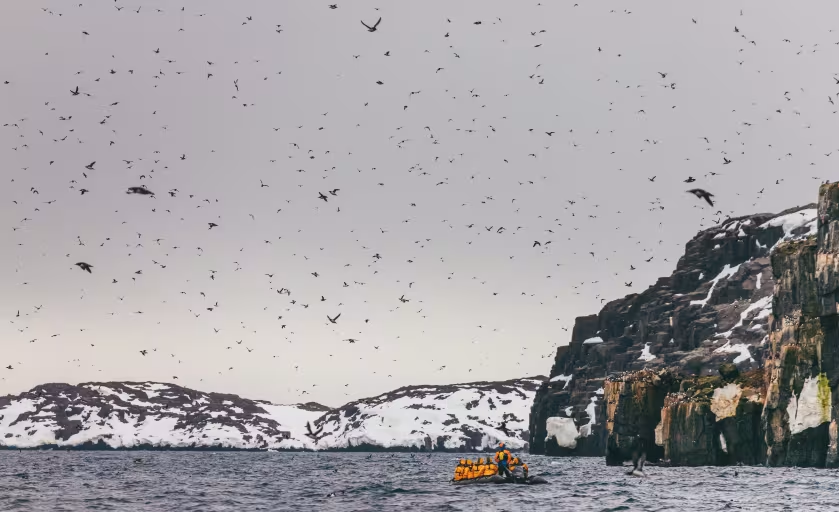
Situated more than 400 kilometers north of mainland Norway, where the Greenland, Norwegian, and Barents sea converge, Bear Island is the gateway to Svalbard—and home to prolific bird populations. Visiting is a special privilege, as the island is rarely accessed due to its isolation. But it’s well worth the effort. More than 1.5 million birds flock to Bear Island each year. Hundreds of thousands nest on its near-vertical cliffs, where they can forage in the rich marine environment. If wind and waves allow, it’s possible we’ll offer a Zodiac cruise here along cliffs teeming with birds, with a constant procession coming and going from their nest sites. Little auks, Brünnich’s guillemots, common guillemots, kittiwakes, and northern fulmars are found in prolific numbers, alongside smaller colonies of Atlantic puffins. Many more migratory birds use the island as a critical stopover on their annual journey to the Arctic. On a map, Bear Island appears small. But by Zodiac, its cliff walls—some rising more than 400 meters (1,310 feet) from the sea—feel colossal. Shorelines are fully exposed to the open ocean, with waves crashing in an astounding display of nature’s power. A few sheltered coves—used by whalers, sealers, explorers, and researchers from the 16th to 21st centuries—may offer us a chance to explore this wild outpost at the gates of Svalbard. In early May, we may see hints of green emerging from an otherwise snowy landscape. Arctic foxes may be spotted on shore, eagerly awaiting the return of birds and their eggs. If conditions allow, we’ll make landfall, walking where few humans ever do. Remnants of whaling history from the early 17th century, along with more recent traces of meteorological and military activity, can be found here. Still, despite any human presence, the island retains a powerful sense of wilderness.

Day 9 & 10: Storfjorden: Into the realm of Ice

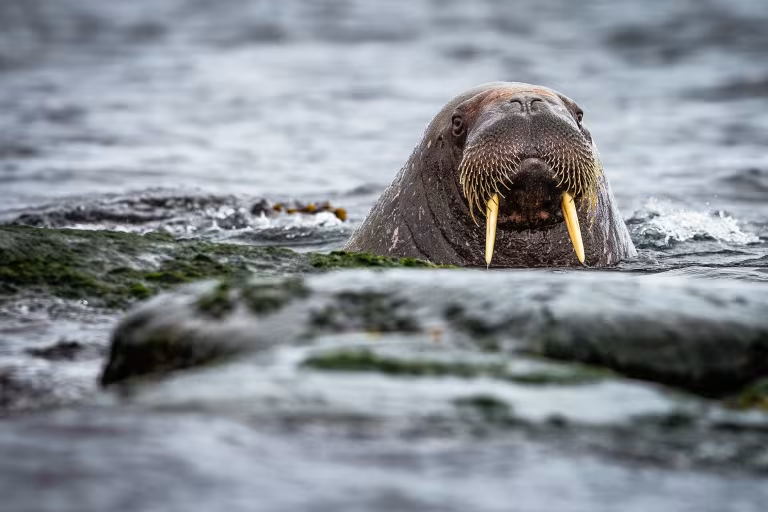
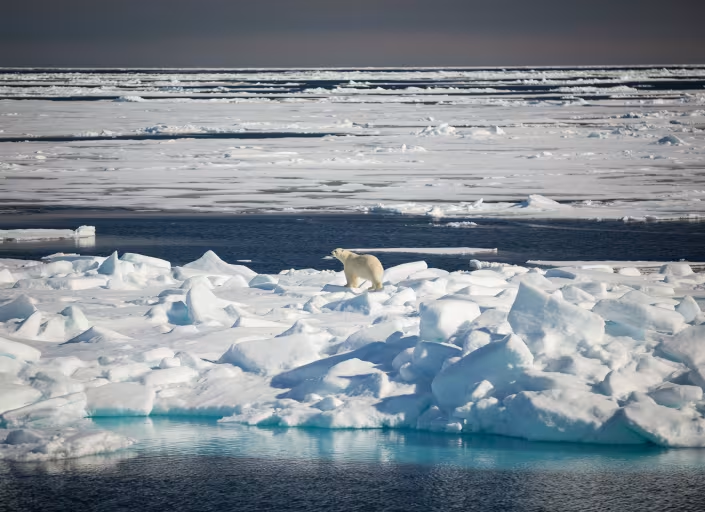
Our introduction to Svalbard begins in Storfjorden, a wide fjord in southern Svalbard that is often dense with sea ice in May. How far we travel will depend on current ice conditions. Sea ice is dynamic, capable of shifting dozens of kilometers in a day, and we’ll adapt accordingly to find the best opportunities to explore this keystone feature of the Arctic. We may spend considerable time here, navigating by ship and Zodiac along the ice edge in search of iconic wildlife such as polar bears and walrus, both drawn to the life-giving sea ice. Wildlife movements are unpredictable, so keep your binoculars close—you never know when something may appear. Your Expedition Team will share insights into the region’s features and history as we explore. If conditions allow, we may even step onto the sea ice itself. Whether on foot or by Zodiac, encountering sea ice up close is a one-of-a-kind experience. Reading about it or seeing it in documentaries can’t compare to hearing it crack with the tide and currents, or breathing in the ocean air as you gaze across this iconic Arctic landscape.

Day 11: Hornsund: Mountains, glaciers, and icebergs

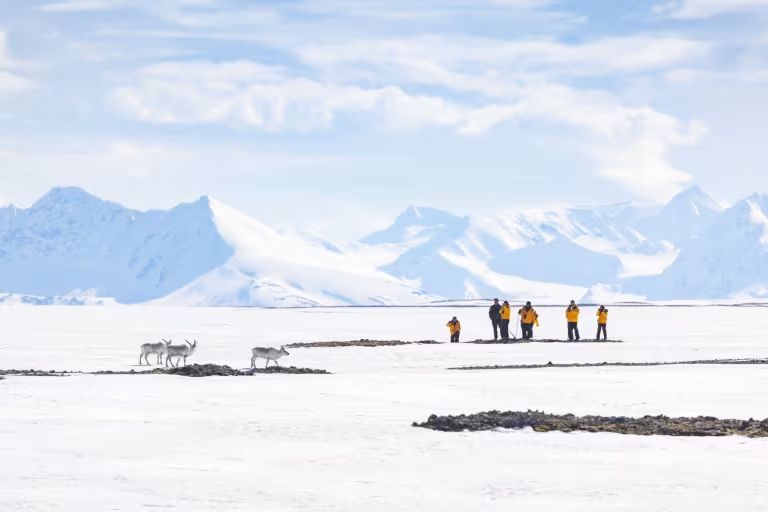
After excitedly exploring the open sea ice, we’ll continue toward Svalbard’s west coast for a closer, more intimate encounter with the wilderness of the archipelago. Our first day will be spent in and around Hornsund, a region of striking landscapes, mountains, glaciers and icebergs. Sea ice may still be present, and if so, we’ll watch for wildlife whose lives depend on it for food and survival. Our aim is to explore the fjord by Zodiac and on foot, though you should expect plenty of snow underfoot. Hornsund is home to several tidewater glaciers, which we hope to approach by Zodiac. Icebergs mix with brash and sea ice, creating a unique crackling soundscape that echoes the rhythm of the Arctic. Surrounding us, 800 to 1,400-meter (2,625 to 4,593 feet) peaks rise beneath Midnight Sun skies, the kind of scene many envision when dreaming of the High Arctic. Watch for Arctic fox, often seen in the area. Seabird colonies thrive here too, a reminder of the epic migrations these species undertake each spring to reach Svalbard—and again each fall as they return south.

Day 12: Bellsund: Fjords, glaciers, birds and snow-capped mountains

Moving north up the coast, we enter another large fjord with many smaller branches, each worth exploring. Bellsund, much like Hornsund, features several tidewater glaciers, which we aim to visit as conditions allow. It’s also home to a remarkable little auk colony, which we’ll approach by Zodiac to observe the early summer activity. Birder or not, it’s hard not to admire these small, resilient birds, perfectly adapted to this seemingly harsh environment. By late spring, skies over the colony are thick with birds, and we hope to witness the start of this seasonal spectacle. Reindeer are often spotted here too, and we’ll be watching for them. The landscape is iconic—snowcapped peaks layered in all directions, jagged rocky outcrops, and soft, snow-covered plains. If conditions allow, we’ll go ashore, though even in May, snow is likely.

Day 13: Krossfjorden: Dramatic tidewater glaciers

Overnight, we’ll push far up the coast to Krossfjorden, just 660 nautical miles from the North Pole. We aim to explore as much of the west coast as possible, as this dramatic fjord lies along a stretch of coastline shaped by a relatively warm current flowing from south to north—creating a surprisingly temperate environment compared to the harsher conditions farther north and east. Depending on ice and weather conditions, we hope to venture deep into the fjord to iconic sites such as Lilliehöökbreen—a stunning tidewater glacier where seals often haul out on floating ice. The landscapes here blend the gentle and the dramatic—a picture-perfect scene of northern wilderness. To add variety to your photographs, consider experimenting with black and white photography, as the textures of mountains, valleys, snow, ice, and clouds can create striking images. You may also spot Arctic foxes, whether out on the ice or along the hillsides above, and seabird colonies occupy several of the cliffs deeper in the fjord. Avid birders should keep an eye out for king eiders. While Longyearbyen holds the title of northernmost city in the world, the northernmost settlement—Ny-Ålesund—lies in Kongsfjorden, a southern offshoot of Krossfjorden. Originally a coal mining outpost over a century ago, it now serves as an important year-round research station. Take a moment to soak in the surroundings and imagine what life must be like when the sun doesn’t set for months. Conversely, consider the challenges of staffing a research station through the long polar night, when the sun doesn’t rise for months.

Day 14: Smeerenburgfjorden: Sea ice, walruses, and ghosts of a whaling past

Today marks the northernmost point of our journey—just over 1300 kilometers (800 miles) from the North Pole. That’s comparable to a day-long road trip from St. Louis, Missouri, to Washington, (or Berlin to Milan or Brisbane to Canberra, Australia) yet here, it leads straight into the heart of the Arctic. As we look north from Smeerenburgfjorden, a striking fjord in northwest Svalbard, we can envision a wilderness covered in sea ice, stretching across the cap of the northern hemisphere all the way to Alaska. It’s theoretically possible to travel in a straight line to Greenland, Canada, Siberia or Alaska without encountering any land in between. Sea ice may lie just north of the coastline—or dozens of nautical miles offshore— depending on the currents and how the ice is moving at the time. Deeper into the fjord, we hope to land at a known walrus haulout: a sandy beach often covered in snow but used by walruses throughout the year. Arctic terns, among the world’s most impressive migratory species, nest in the fjord, and we may see them flying overhead as we travel by foot or Zodiac. From the walrus haulout, mountain ranges stretch across the fjord, evoking a sense of standing at—or beyond—the frontier. Evidence of human activity remains: relics of whaling and sealing industries dating back to the 1600s are still visible onshore. Not full-scale factories, but trypots—used to render whale blubber into oil—remain scattered about the area.

Day 15: Isfjorden: Mountains, bird cliffs, and wildlife

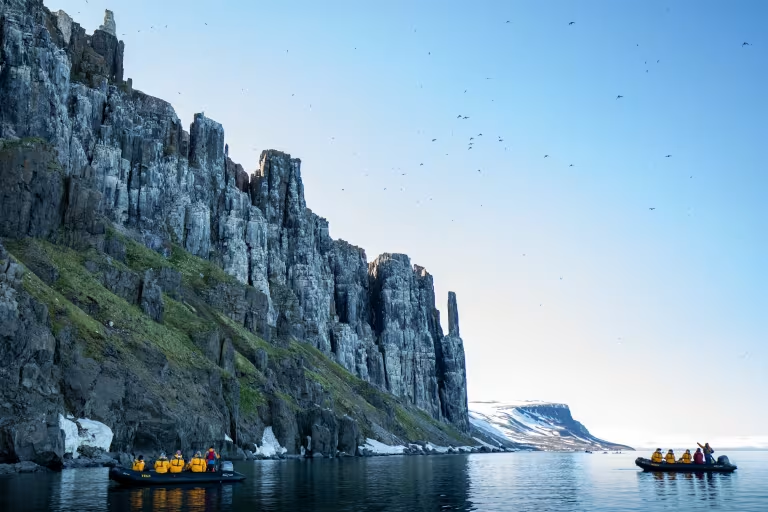
Our final expedition day will likely be spent in or around Isfjorden, the fjord system where Longyearbyen is located. The mountainous, glaciated scenery continues here, and we’ll spend much of the day exploring the coastlines—likely among seabirds. Isfjorden can also be an excellent place to spot whales, some of which may have arrived at their summer feeding grounds by now. Spend time on the outer decks taking in the scenery—you may spot various species of marine life. Our main goal today is to visit Alkhornet, the iconic seabird colony and also a good place to look for reindeer and Arctic fox. If conditions allow, we’ll make landfall, giving ourselves one last chance to set foot in this far northern wilderness. As we prepare to leave, we can appreciate the little auks, perfectly at home beneath the horn-shaped mountain overlooking the fjord, and the reindeer patiently awaiting summer’s abundant vegetation. They’ll remain here for a while, going about their daily lives in a vast wilderness that stretches in all directions for hundreds—if not thousands—of nautical miles.

Day 16: Disembark in Longyearbyen and Fly to Helsinki

The moment has come to say farewell. Time permitting, you may be able to explore the frontier-style settlement of Longyearbyen before the group transfer to the airport for the charter flight to Helsinki. Upon arrival in Helsinki, you’ll be transferred to your hotel for the night. Both are included in the Charter Flight & Hotel Package.

Day 17: Depart Helsinki

After breakfast, make your way independently to the airport for your onward flight home, or stay to explore Finland’s culturally-rich capital on your own.

Inclusions

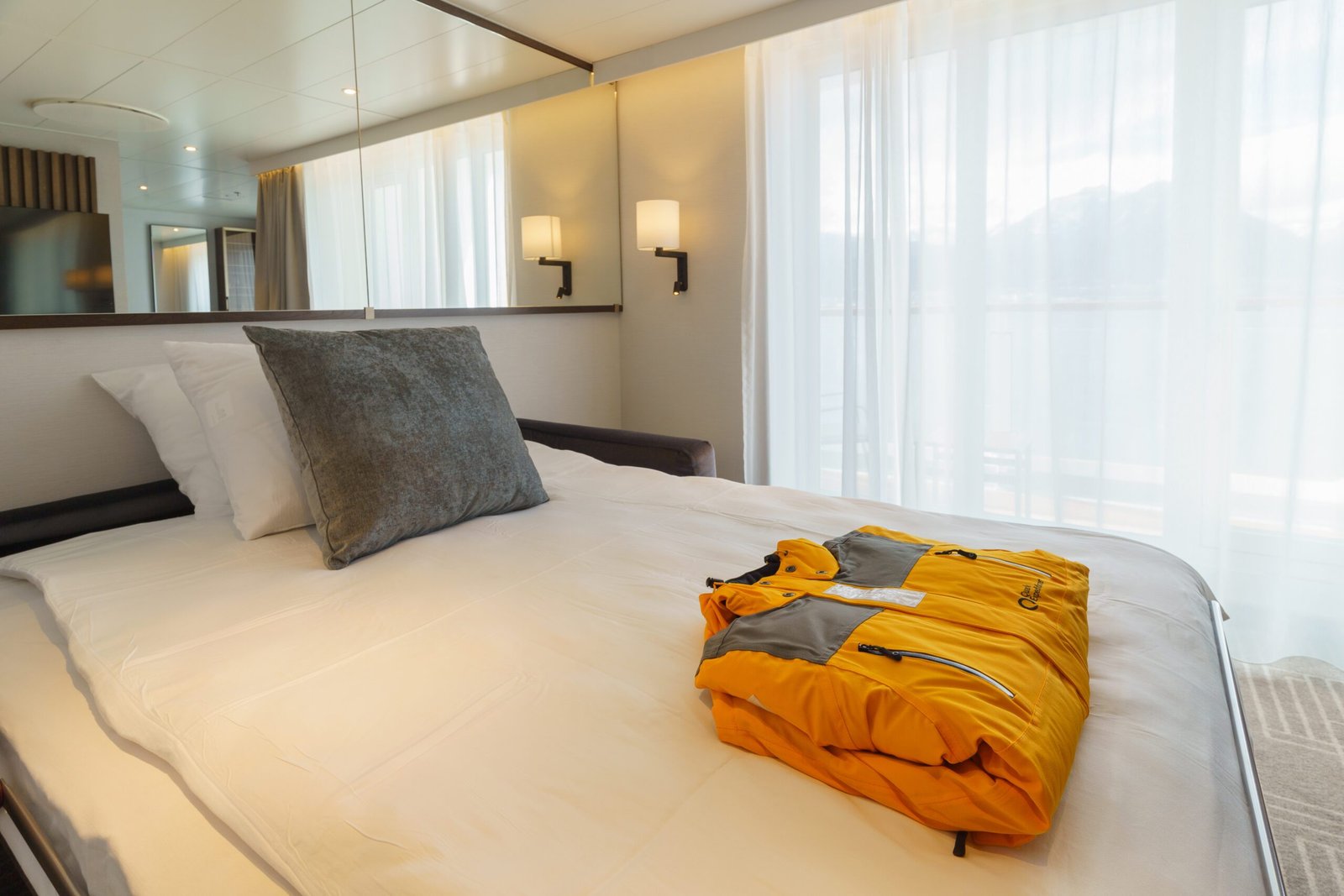
  • An official Quark Expeditions® parka to keep
  • Leadership throughout your voyage by our experienced Expedition Leaders, including shore landings and other activities
  • All Zodiac transfers and cruising as per the daily program
  • All shore landings as per the daily program
  • Shipboard accommodation with daily housekeeping
  • All meals, snacks, soft drinks and juices on board throughout your voyage (Please inform us of any dietary requirements as far in advance as possible.)
  • Complimentary select beer, wines and cocktails during bar service hours and dinner
  • Complimentary coffee, tea and cocoa available around the clock
  • Formal and informal presentations by our Expedition Team and guest speakers as scheduled
  • A photographic journal documenting the expedition
  • A pair of waterproof expedition boots on loan for landings and Zodiac cruising excursions
  • Hair dryer and bathrobes in every cabin
  • Complimentary Wi-Fi service on one device permitting basic Internet browsing, email, posting on social media and voice applications. (Premium packages are available for more data-intensive applications.) Note: Internet access in the polar regions is subject to geography, climate, and other factors beyond our control
  • All miscellaneous service taxes and port charges throughout the program
  • All luggage handling aboard the ship

CHARTER FLIGHT & HOTEL PACKAGE INCLUDES:

Package valued at $1,045 USD is included in the expedition

  • One pre-expedition hotel night in Aberdeen, and one post-expedition hotel night in Helsinki (breakfast included)
  • Group transfer from Aberdeen hotel to ship on embarkation day
  • Departure transfer in Longyearbyen on disembarkation day
  • Charter flight from Longyearbyen to Helsinki on disembarkation day

Exclusions

  • Charter Flight & Hotel Package* (when applicable – please review trip-specific details below)
  • International airfare
  • Arrival and departure transfers
  • Passport and visa expenses
  • Government arrival and departure taxes not mentioned above
  • Meals ashore unless otherwise specified
  • Baggage, cancellation, interruption and medical travel insurance—strongly recommended
  • Excess-baggage fees on international and domestic flights
  • Mandatory waterproof pants for Zodiac cruising, or any other gear not mentioned
  • Laundry, bar, spa and other personal charges unless specified
  • Phone charges may vary by location
  • Voluntary gratuity at the end of the voyage for shipboard staff and crew
  • Additional overnight accommodation
  • Adventure Options not listed in Included Activities

To confirm reservations, a deposit of 25% (unless indicated otherwise at time of booking) of the net, discounted rate (minimum US$1000 per person) of the total invoice amount is required at time of booking. The deposit must be paid by major credit card, wire transfer, check or money order. For any bookings within 120 days of departure full payment is required. Deposit amounts may vary for special promotions and are subject to the promotion terms and conditions. Balances are due 120 days prior to departure.

All late payments are subject to a penalty of 1.5% interest per month, or 18% per annum. QEI reserves the right to cancel any booking that is not paid within 120 days of departure or deny boarding on any unpaid balances.
Rates per person

Cabin Details

Solo Panorama

Solo Panorama

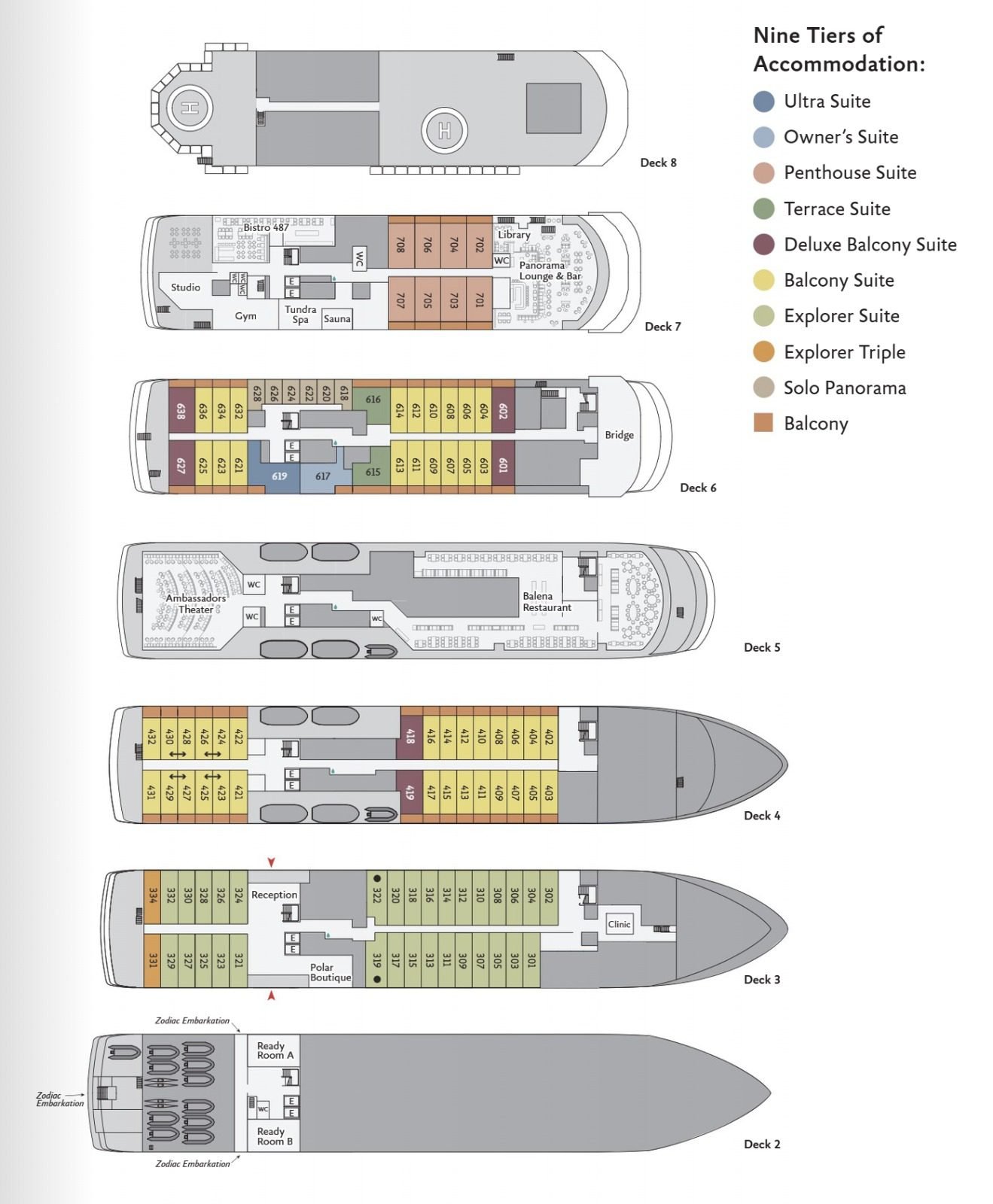
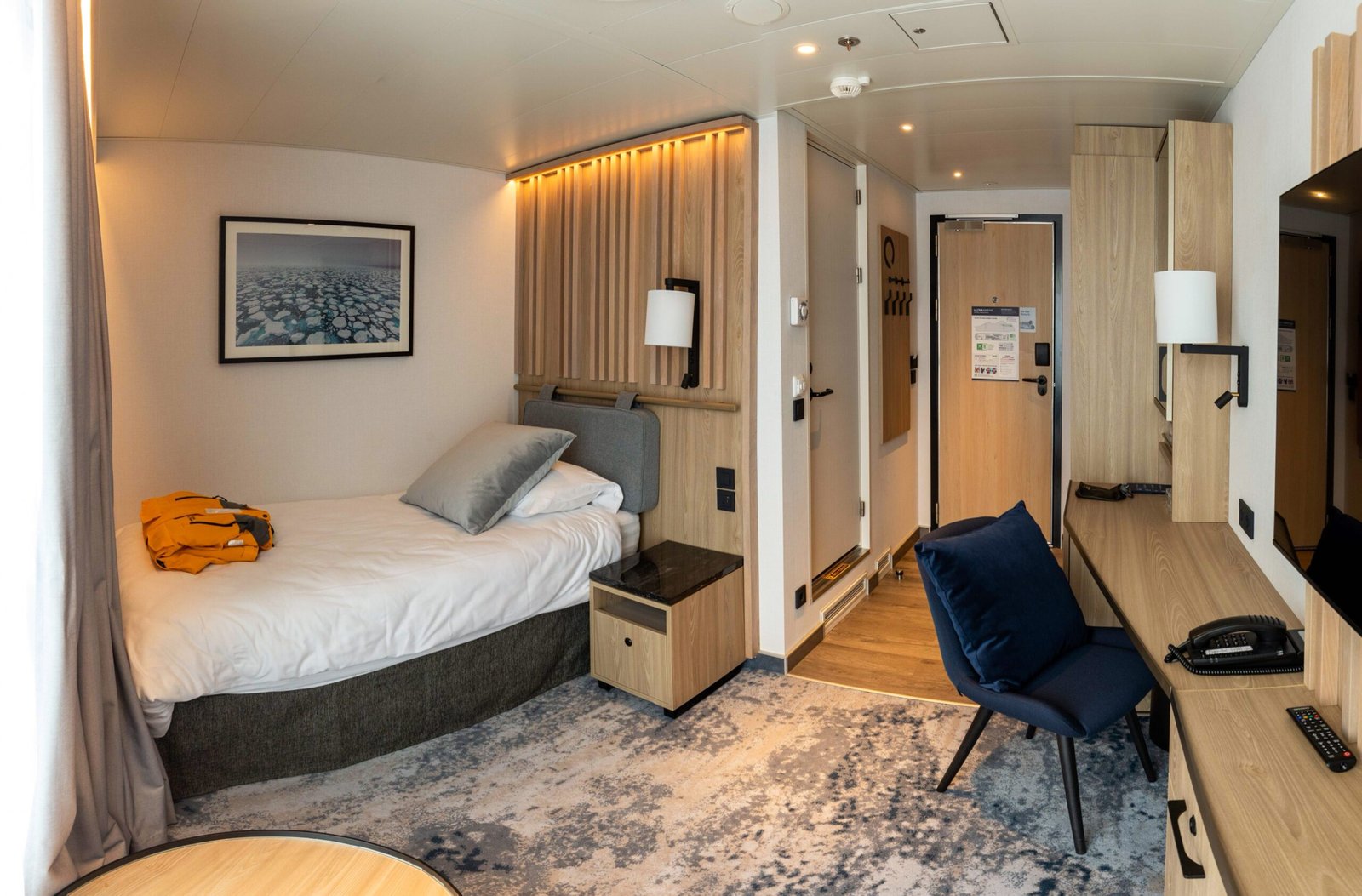
Located on Deck 6 and approximately 132 sq. ft. (12 sq. m) in size, this cabin has a single bed,and floor-to-ceiling windows. Other amenities include a refrigerator, safe, TV, and a private bathroom with shower and heated floors.

Please note: All stateroom images of the Ultramarine are artist’s impressions, and final designs may vary.

Passengers

1

Size

132 ft2 (12 m2 )

View

Floor to ceiling windows

U$ 26,240
U$ 21,921
Explorer Triple

Explorer Triple

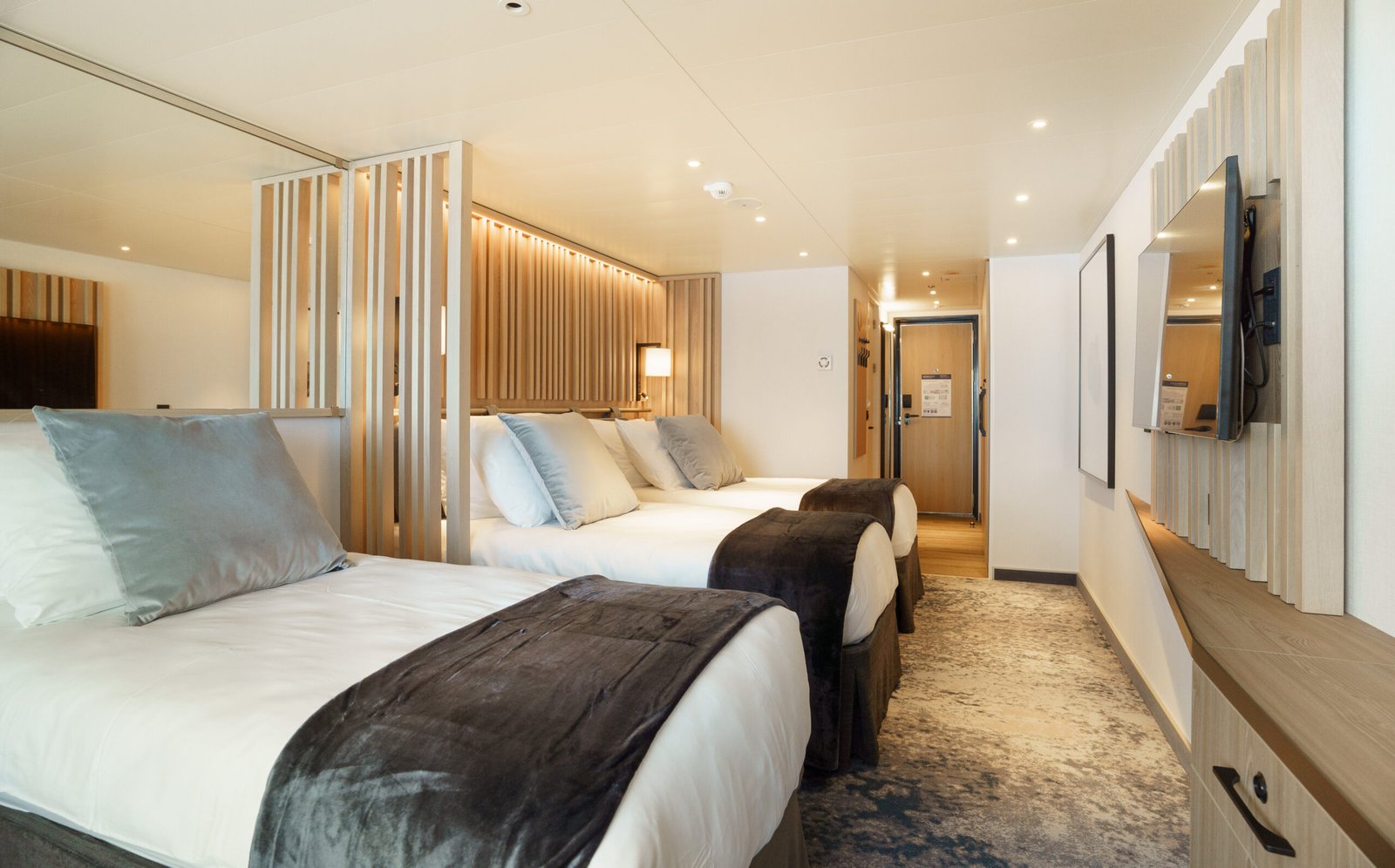
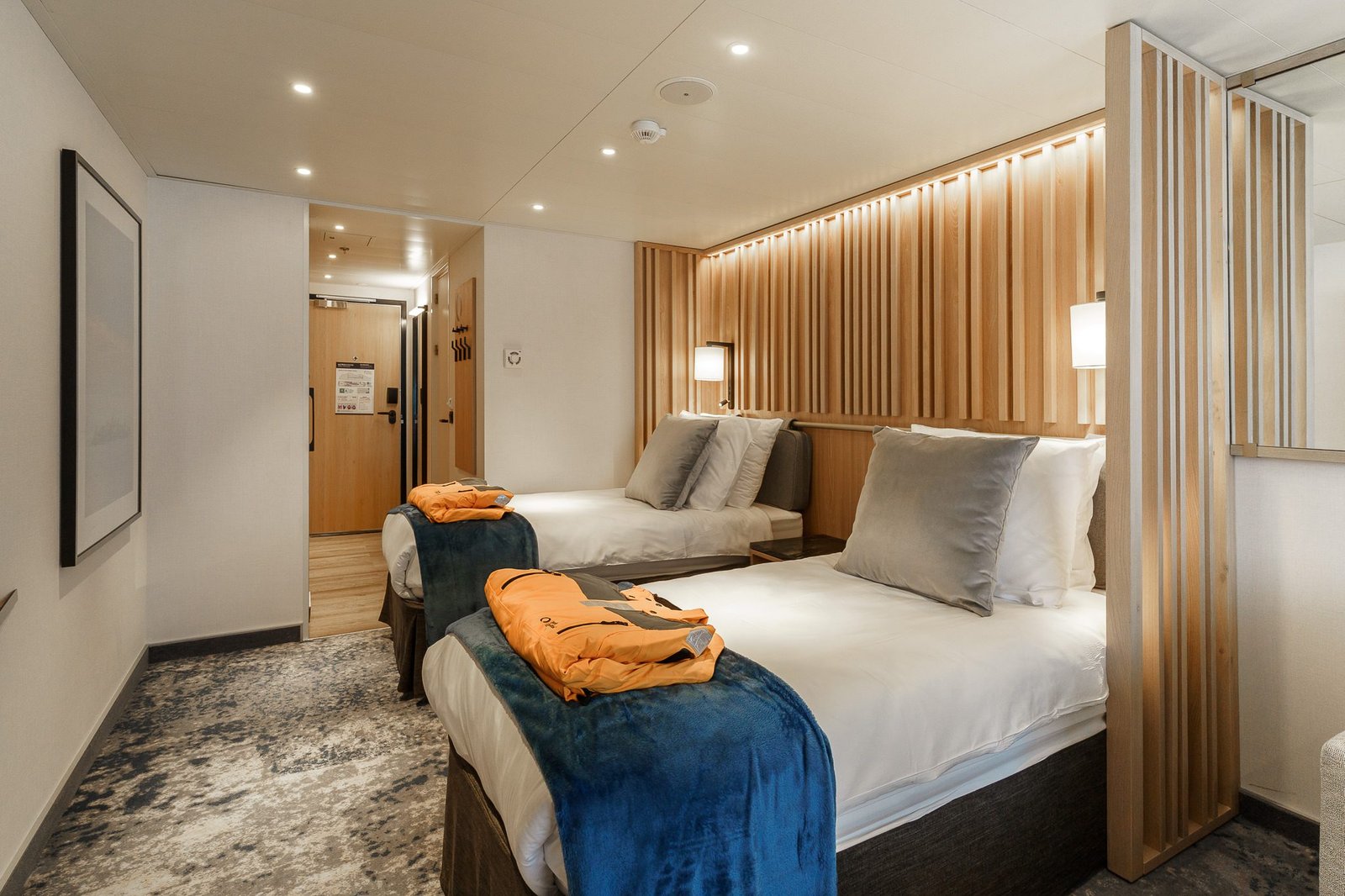
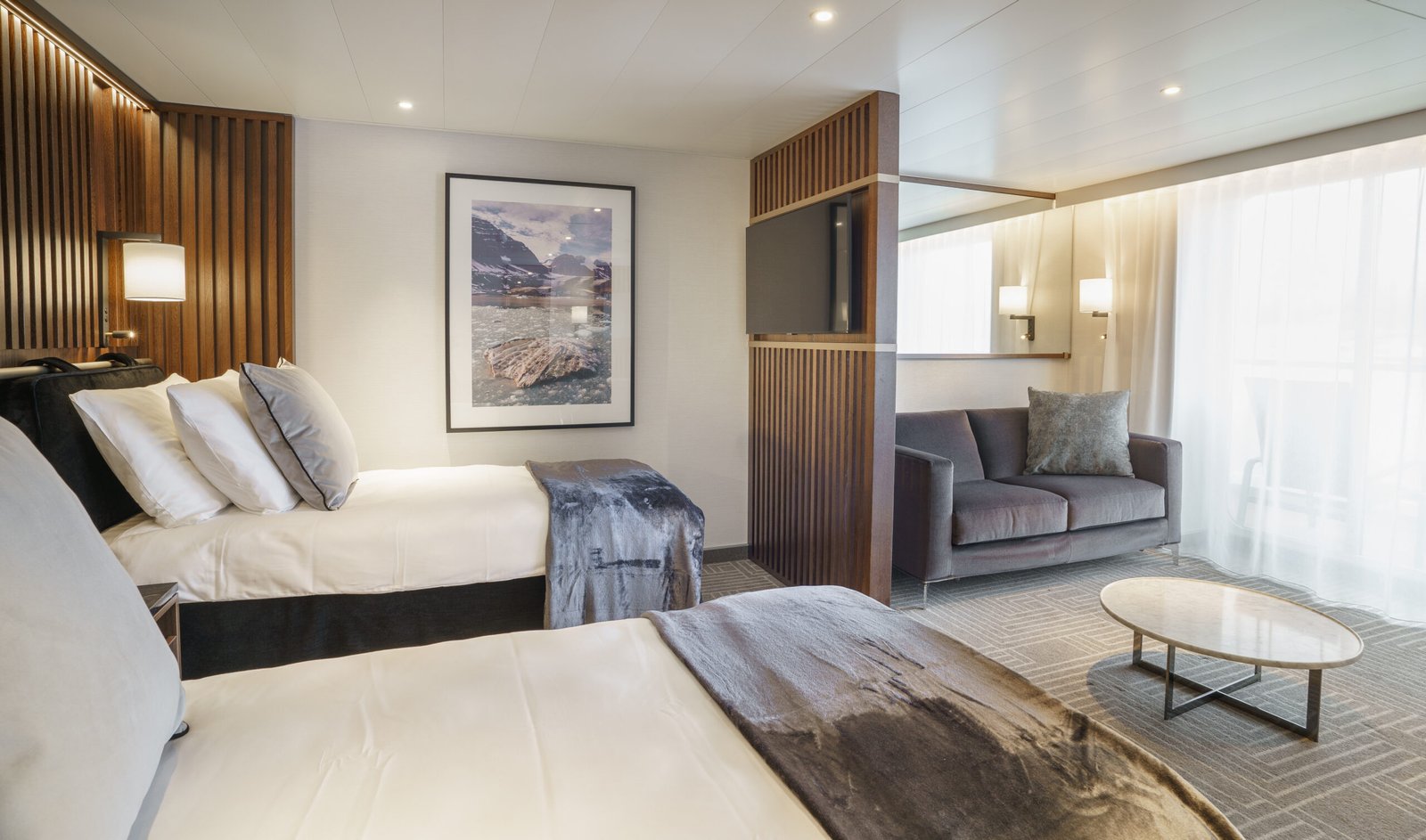
Located on Deck 3 and approximately 285 sq. ft. (26.5 sq. m) in size, this suite has three single beds, two of which can be combined into a double bed, and a picture window. Other amenities include a refrigerator, safe,TV, and a private bathroom with shower and heated floors.

Please note: All stateroom images of the Ultramarine are artist’s impressions, and final designs may vary.

Passengers

3

Size

285 ft2 (26.5 m2)

View

Picture windows

U$ 14,940
U$ 11,751
Explorer Suite

Explorer Suite

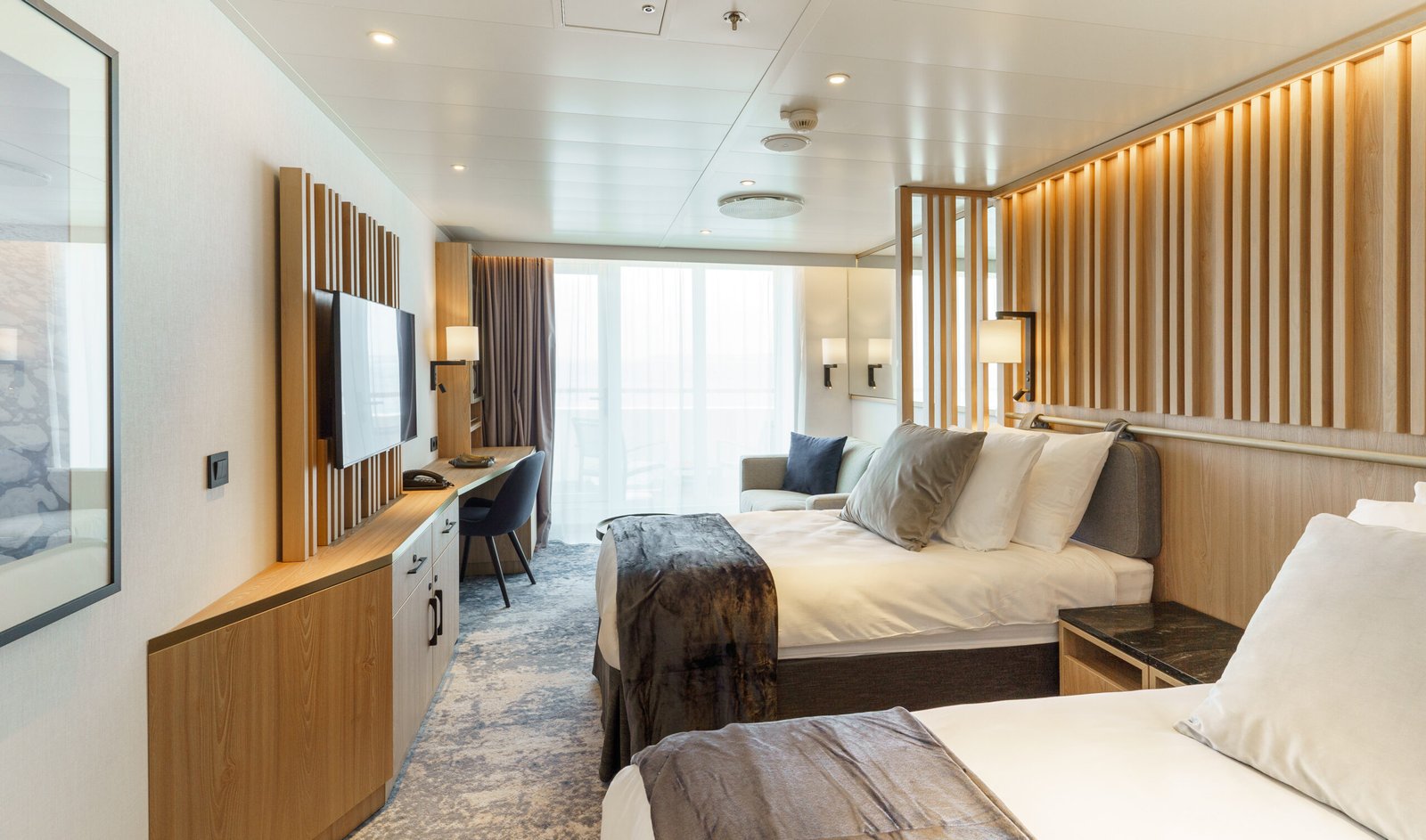
Located on Deck 3 and approximately 285 sq. ft. (26.5 sq. m) in size, this suite has one double or two single beds, and a picture window. Other amenities include a refrigerator, safe, TV, and a private bathroom with shower and heated floors. Suites 319 and 322 offer modified layouts and bathrooms for wheelchair accessibility

Please note: All stateroom images of the Ultramarine are artist’s impressions, and final designs may vary.

Passengers

2

Size

285 ft2 (26.5 m2)

View

Picture windows

U$ 17,440
U$ 14,001
Balcony Suite

Balcony Suite

Located on Decks 4 & 6 and approximately 226 sq. ft. (21 sq. m) in size, this suite has one double or two single beds, and a 52 sq. ft. (4.8 sq. m) balcony*. The balconies in suites 421, 422, 423, and 424 are partially enclosed. Other amenities include a refrigerator, safe, TV, and a private bathroom with shower and heated floors. Some suites in this category offer interconnecting rooms.

Please note: All stateroom images of the Ultramarine are artist’s impressions, and final designs may vary.

Passengers

2

Size

226 ft2 (21 m2 )

View

Walk out balcony

U$ 19,040
U$ 15,441
Deluxe Balcony Suite

Deluxe Balcony Suite

Located on Decks 4 & 6 and approximately 299 sq. ft. (28 sq. m) in size, this suite has one double or two single beds, and a 70 sq. ft. (6.5 sq. m) balcony*. Other amenities include a refrigerator, safe, TV, and a private bathroom with shower, bathtub and heated floors.

Please note: All stateroom images of the Ultramarine are artist’s impressions, and final designs may vary.

Passengers

2

Size

299 ft2 (28 m2 )

View

Walk out balcony

U$ 22,340
U$ 18,411
Penthouse Suite

Penthouse Suite

Located on Deck 7 and approximately 369 sq. ft. (34 sq. m) in size, this suite has one double or two single beds, and a 67 sq. ft. (6.2 sq. m) balcony *. Other amenities include a refrigerator, safe, TV, and a private bathroom with shower, bathtub and heated floors.

Please note: All stateroom images of the Ultramarine are artist’s impressions, and final designs may vary.

Passengers

2

Size

369 ft2 (34 m2)

View

Walk out balcony

U$ 24,740
U$ 20,571
Terrace Suite

Terrace Suite

Located on Deck 6 and approximately 350 sq. ft. (32.5 sq. m) in size, this suite has one double or two single beds, and a 100 sq. ft. (9.3 sq. m) balcony*. Other amenities include a refrigerator, safe, TV, and a private bathroom with shower, bathtub and heated floors.

Please note: All stateroom images of the Ultramarine are artist’s impressions, and final designs may vary.

Passengers

2

Size

350 ft2 (32.5 m2 )

View

Walk out balcony

U$ 23,140
U$ 19,131
Owner’s Suite

Owner’s Suite

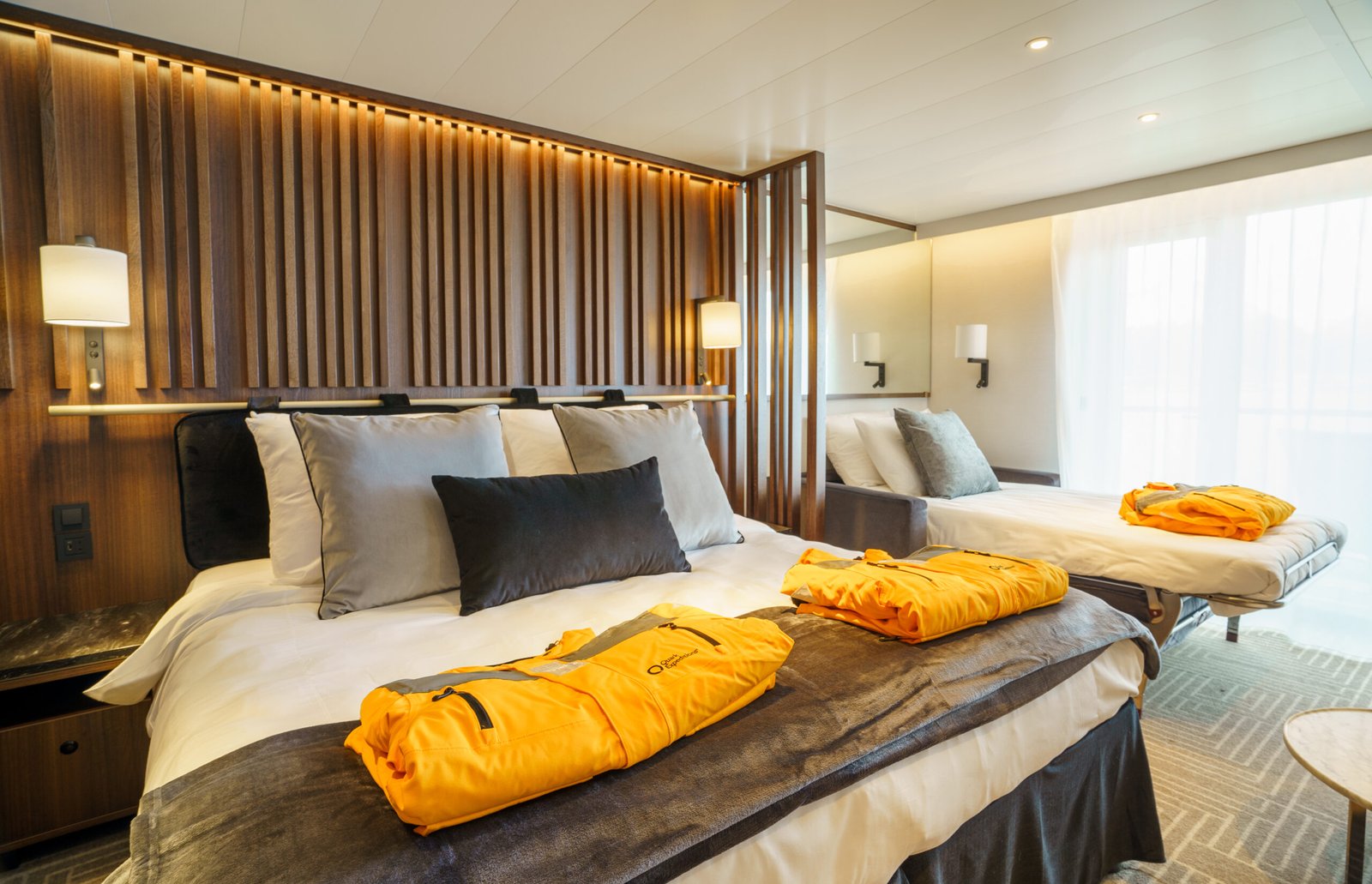
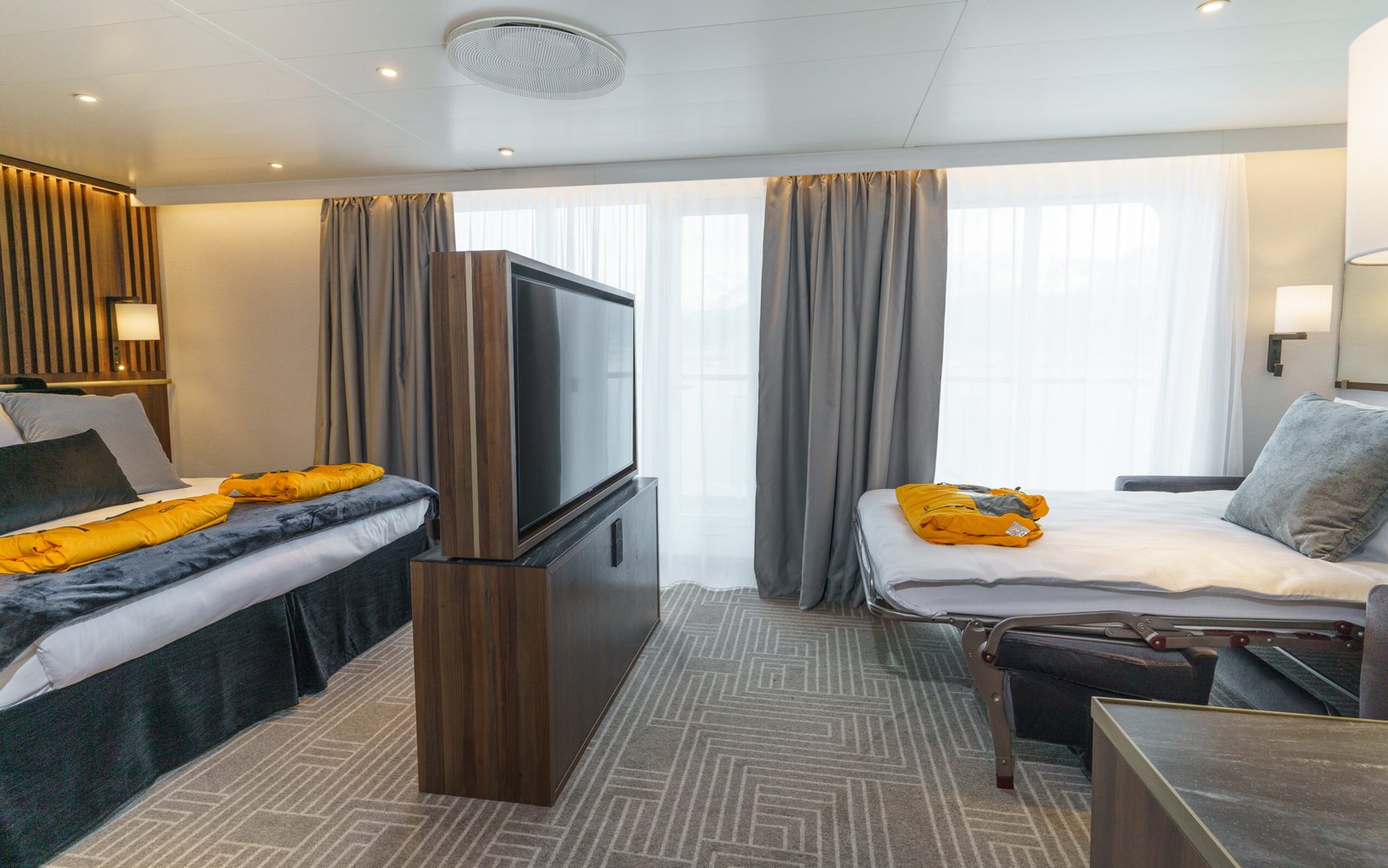
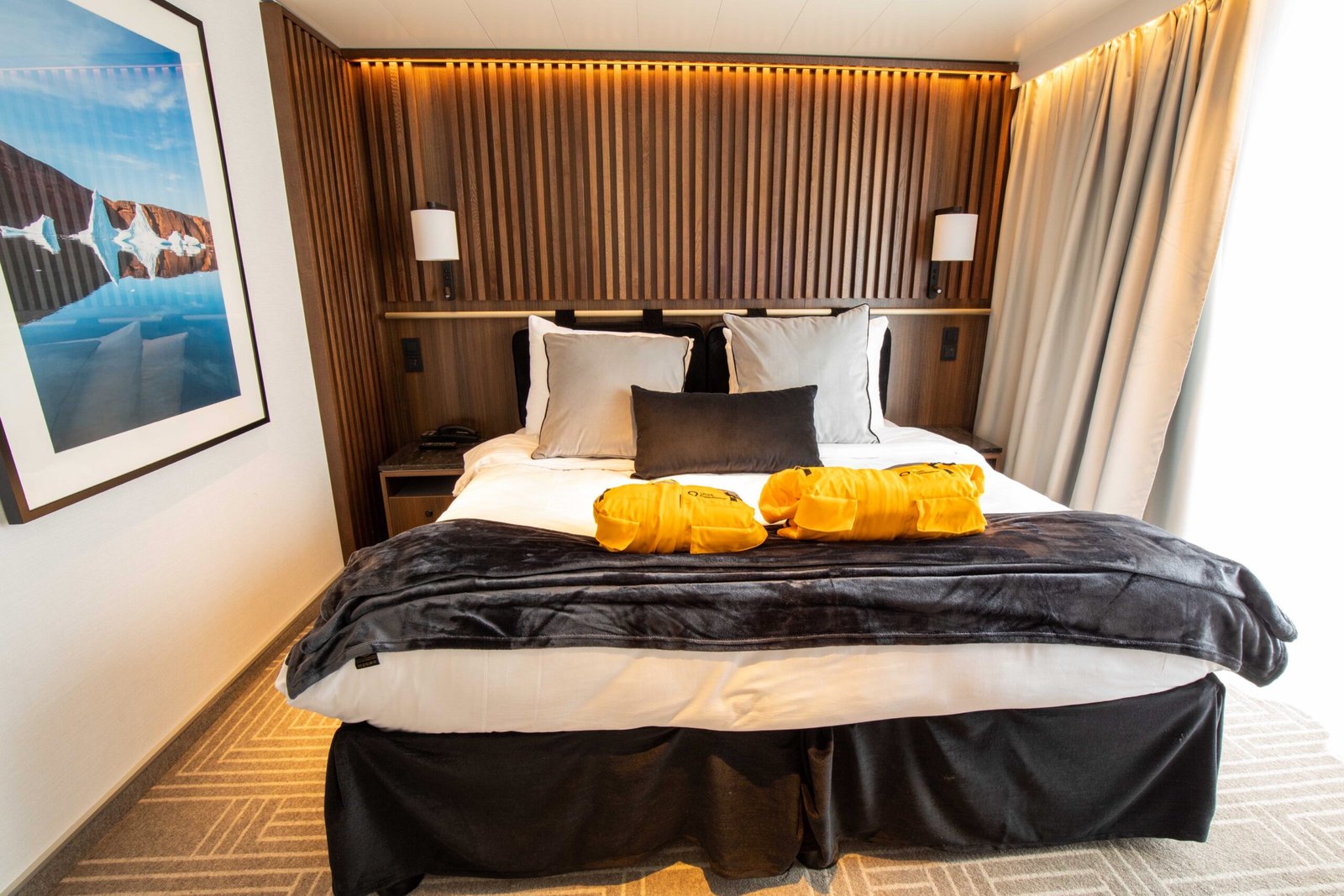
Located on Deck 6 and approximately 446 sq. ft. (41 sq. m) in size, this suite has one double or two single beds, and a 46 sq. ft. (4.3 sq. m) balcony*. Other amenities include a refrigerator, safe, TV, private bedroom with walk-in closet, sitting area with sofa bed and additional closet, two separate living spaces, powder room, and a private bathroom with shower, bathtub and heated floors.

Please note: All stateroom images of the Ultramarine are artist’s impressions, and final designs may vary.

Passengers

2

Size

446 ft2 (41 m2 )

View

Walk out balcony, Floor to ceiling windows
U$ 30,540
U$ 25,791
Ultra Suite

Ultra Suite

Located on Deck 6 and approximately 563 sq. ft. (52 sq. m) in size, this suite has one double or two single beds, and a 46 sq. ft. (4.3 sq. m) balcony*. Other amenities include a refrigerator, safe, TV, private bedroom with walk-in closet, sitting area with sofa bed and additional walk-in hallway closet, two separate living spaces, powder room, and a private bathroom with shower, bathtub and heated floors.

Please note: All stateroom images of the Ultramarine are artist’s impressions, and final designs may vary.

Passengers

2

Size

563 ft2 (52 m2 )

View

Walk out balcony, Floor to ceiling windows

U$ 33,740
U$ 28,671
Solo Panorama

Solo Panorama

Located on Deck 6 and approximately 132 sq. ft. (12 sq. m) in size, this cabin has a single bed,and floor-to-ceiling windows. Other amenities include a refrigerator, safe, TV, and a private bathroom with shower and heated floors.

Please note: All stateroom images of the Ultramarine are artist’s impressions, and final designs may vary.

Passengers

1

Size

132 ft2 (12 m2 )

View

Floor to ceiling windows

U$ 26,240
U$ 21,921
Explorer Triple

Explorer Triple

Located on Deck 3 and approximately 285 sq. ft. (26.5 sq. m) in size, this suite has three single beds, two of which can be combined into a double bed, and a picture window. Other amenities include a refrigerator, safe,TV, and a private bathroom with shower and heated floors.

Please note: All stateroom images of the Ultramarine are artist’s impressions, and final designs may vary.

Passengers

3

Size

285 ft2 (26.5 m2)

View

Picture windows

U$ 14,940
U$ 11,751
Explorer Suite

Explorer Suite

Located on Deck 3 and approximately 285 sq. ft. (26.5 sq. m) in size, this suite has one double or two single beds, and a picture window. Other amenities include a refrigerator, safe, TV, and a private bathroom with shower and heated floors. Suites 319 and 322 offer modified layouts and bathrooms for wheelchair accessibility

Please note: All stateroom images of the Ultramarine are artist’s impressions, and final designs may vary.

Passengers

2

Size

285 ft2 (26.5 m2)

View

Picture windows

U$ 17,440
U$ 14,001
Balcony Suite

Balcony Suite

Located on Decks 4 & 6 and approximately 226 sq. ft. (21 sq. m) in size, this suite has one double or two single beds, and a 52 sq. ft. (4.8 sq. m) balcony*. The balconies in suites 421, 422, 423, and 424 are partially enclosed. Other amenities include a refrigerator, safe, TV, and a private bathroom with shower and heated floors. Some suites in this category offer interconnecting rooms.

Please note: All stateroom images of the Ultramarine are artist’s impressions, and final designs may vary.

Passengers

2

Size

226 ft2 (21 m2 )

View

Walk out balcony

U$ 19,040
U$ 15,441
Deluxe Balcony Suite

Deluxe Balcony Suite

Located on Decks 4 & 6 and approximately 299 sq. ft. (28 sq. m) in size, this suite has one double or two single beds, and a 70 sq. ft. (6.5 sq. m) balcony*. Other amenities include a refrigerator, safe, TV, and a private bathroom with shower, bathtub and heated floors.

Please note: All stateroom images of the Ultramarine are artist’s impressions, and final designs may vary.

Passengers

2

Size

299 ft2 (28 m2 )

View

Walk out balcony

U$ 22,340
U$ 18,411
Penthouse Suite

Penthouse Suite

Located on Deck 7 and approximately 369 sq. ft. (34 sq. m) in size, this suite has one double or two single beds, and a 67 sq. ft. (6.2 sq. m) balcony *. Other amenities include a refrigerator, safe, TV, and a private bathroom with shower, bathtub and heated floors.

Please note: All stateroom images of the Ultramarine are artist’s impressions, and final designs may vary.

Passengers

2

Size

369 ft2 (34 m2)

View

Walk out balcony

U$ 24,740
U$ 20,571
Terrace Suite

Terrace Suite

Located on Deck 6 and approximately 350 sq. ft. (32.5 sq. m) in size, this suite has one double or two single beds, and a 100 sq. ft. (9.3 sq. m) balcony*. Other amenities include a refrigerator, safe, TV, and a private bathroom with shower, bathtub and heated floors.

Please note: All stateroom images of the Ultramarine are artist’s impressions, and final designs may vary.

Passengers

2

Size

350 ft2 (32.5 m2 )

View

Walk out balcony

U$ 23,140
U$ 19,131
Owner’s Suite

Owner’s Suite

Located on Deck 6 and approximately 446 sq. ft. (41 sq. m) in size, this suite has one double or two single beds, and a 46 sq. ft. (4.3 sq. m) balcony*. Other amenities include a refrigerator, safe, TV, private bedroom with walk-in closet, sitting area with sofa bed and additional closet, two separate living spaces, powder room, and a private bathroom with shower, bathtub and heated floors.

Please note: All stateroom images of the Ultramarine are artist’s impressions, and final designs may vary.

Passengers

2

Size

446 ft2 (41 m2 )

View

Walk out balcony, Floor to ceiling windows

U$ 30,540
U$ 25,791
Ultra Suite

Ultra Suite

Located on Deck 6 and approximately 563 sq. ft. (52 sq. m) in size, this suite has one double or two single beds, and a 46 sq. ft. (4.3 sq. m) balcony*. Other amenities include a refrigerator, safe, TV, private bedroom with walk-in closet, sitting area with sofa bed and additional walk-in hallway closet, two separate living spaces, powder room, and a private bathroom with shower, bathtub and heated floors.

Please note: All stateroom images of the Ultramarine are artist’s impressions, and final designs may vary.

Passengers

2

Size

563 ft2 (52 m2 )

View

Walk out balcony, Floor to ceiling windows

U$ 33,740
U$ 28,671

MORE INFORMATION

Adventure Options

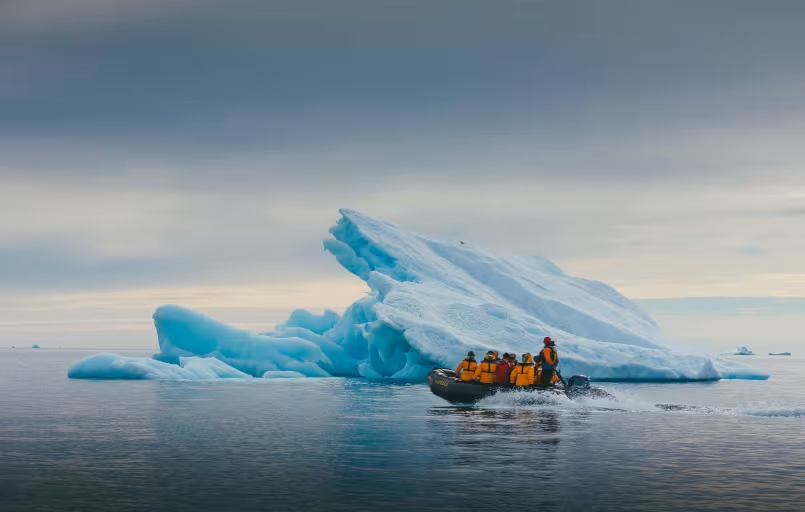
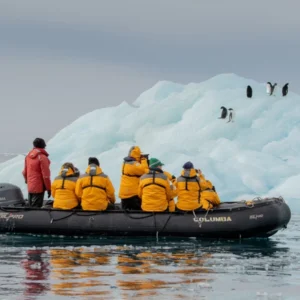
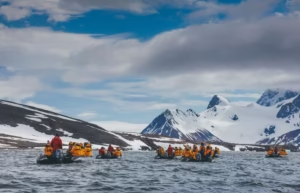
Zodiacs are used for transferring you ashore, transporting your luggage when necessary and for taking you ocean-level cruising among icebergs, whales and seabirds. During the expedition, you will visit remote and isolated sites that are accessible only by Zodiac.

These large, heavy-duty inflatable vessels are extremely safe and were specially designed for expedition work. Zodiacs are the workhorses of Polar expeditions. Separate air compartments retain a large reserve of buoyancy even if these sturdy boats are damaged. Their flat bottom design permits the craft to land directly onto the cobble and ice-strewn beaches that you will encounter on your Polar expedition.
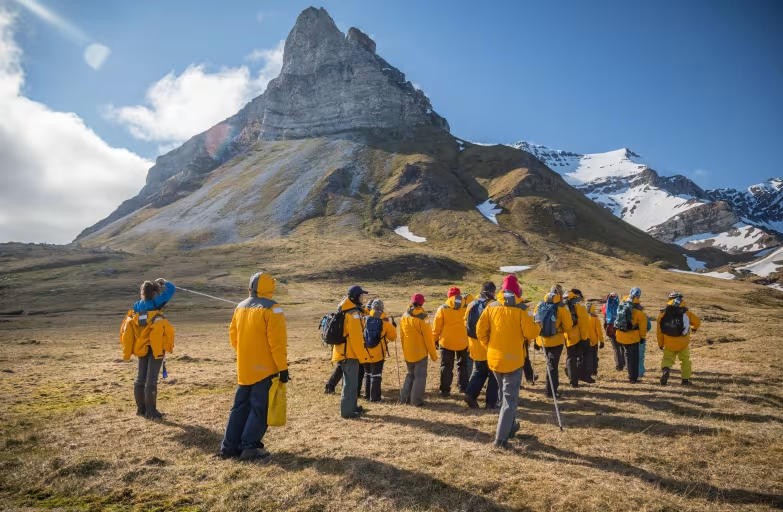
Hiking in the polar regions differs from your typical trail experience. Here, in a tree-less terrain, you are the tallest figure on the landscape as you walk over spongy tundra, crusty snow or sandy beaches in remotes parts of the Arctic and Antarctica. Stepping ashore anywhere in the polar regions means you’re not a distant observer.

Our organized hikes range from short jaunts to the top of lookouts or visits to see wildlife or longer walks of several kilometers over ice and rock and snow. Hiking excursions may last from two to three hours with plenty of time for photographs of wildlife, learning moments from your experienced guides, or just time to stand back and admire the incredible polar surroundings.

No experience is necessary but participants should be able to get in and out of a Zodiac and walk on uneven terrain. Hiking options are tailored to all interests and abilities, from those who want to contemplate the landscape in silence to photographers who want that perfect image to energetic travelers who want to summit a peak in the hopes of seeing wildlife in their natural habitat.
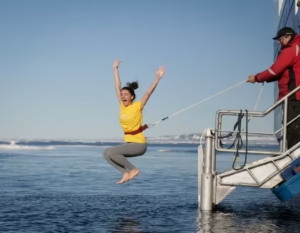
The Polar Plunge is scheduled once during each voyage. Throughout the journey, the Expedition Leader and Captain constantly monitor conditions in order to choose the optimal time and location. The Polar Plunge sometimes takes place onshore or, in many cases, from the gangway or Zodiac. All participants wear a tethered harness and plunge into the polar waters from the side of Zodiac or safety of the gangplank cheered on, of course, by fellow passengers and Expedition Team.

Safety is paramount—the onboard physician always attends the Polar Plunge. Guides in survival gear circle the area in Zodiacs as guests take their turn jumping or cannon-balling into the polar waters.
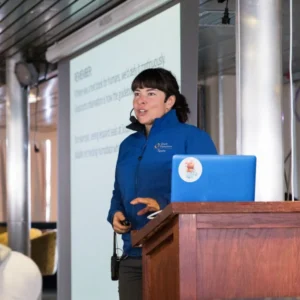
Enjoy daily chats with and presentations by our world-class onboard polar experts—expedition guides, specialists, photography guides and other special guests who will introduce you to the fascinating history, biology, ornithology, glaciology and geology of the region, and much, much more.
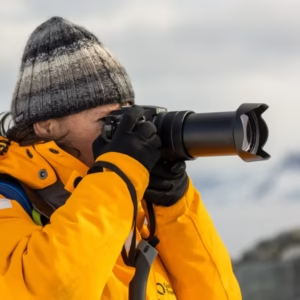
Documenting your voyage so you can take the memories home is a rewarding experience. Our photography guides will help you hone your skills to capture the beauty of the polar regions.
$295 Per Person

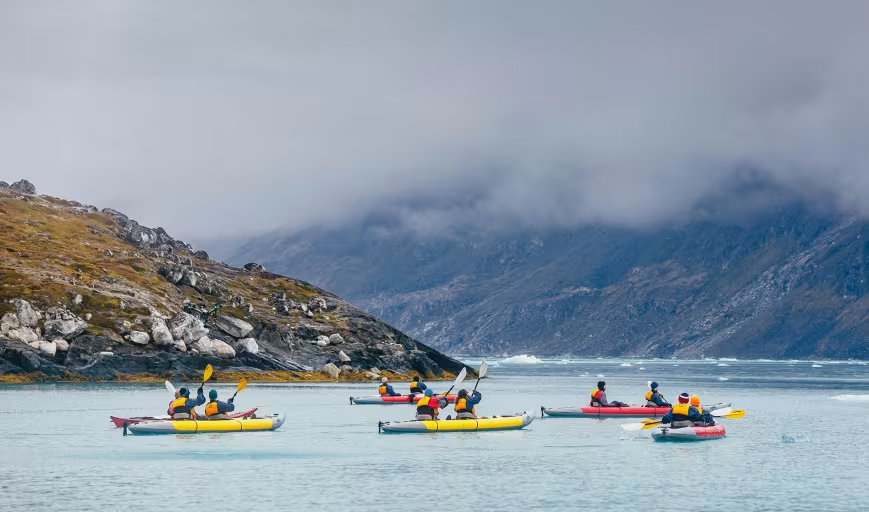
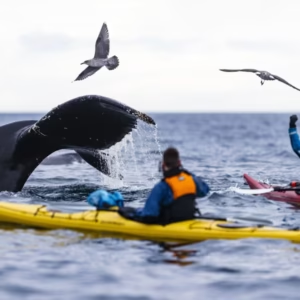
Every sweep of the paddle as your craft glides through the pristine polar waters creates an incredible soundtrack: the jostle of glacial ice, the lapping of waves against the rocky shore, the perpetual drip from your paddle, the call of seabirds, and the occasional splash as wildlife break the surface of the water.

Our Paddle Excursion Program provides sit-on-top, two-person, inflatable kayaks that provide guests with an intimate, water-level experience in unforgettable locations in both the Arctic and Antarctica. These stable, rugged and comfortable crafts are an ideal way to see the polar regions from a different perspective. On-ship, you’ll be provided with instruction and equipment including dry suits, personal flotation devices (PFDs), and waterproof gloves. Experienced guides will lead you safely throughout the paddling excursion. Your group will always be escorted by a safety driver in another kayak who will stay close by to provide additional support.

Excursions last a minimum of one hour and are offered to participants once per voyage. Each group includes 10 paddlers, 1 guide and 1 one safety Zodiac driver. The wind, weather and water conditions determine the timing and location of Paddling Excursions

$1,795 Per Person

Positioning yourself in the seat of a kayak is one of the most intimate ways travelers can connect with the polar regions—at water level, up close, where you can touch and feel every polar sensation imaginable. The Sea Kayak Program enables a small group of like-minded individuals to forge bonds as they explore fjords, glacial faces or mazes of sea ice.

Quark Expeditions Sea Kayak Program is a voyage-length program available in Antarctica, in which kayakers (those who have minimal experience as well as seasoned paddlers) will enjoy the polar regions from a unique perspective.

Conditions and logistics permitting, your kayak guide(s) will endeavor to have you paddling as often as possible throughout the voyage. Typically, sea kayakers are shuttled by Zodiac from the ship to an ideal starting point, where the kayak excursion begins. Guests return to the ship by Zodiac at the end of their paddling experience. Some kayak excursions are designed so guests can go ashore and explore.

In addition to the kayak guides, a safety driver in a Zodiac will always stay nearby to offer assistance if required. Excursions typically last one and a half to three hours.
$1,395 Per Person

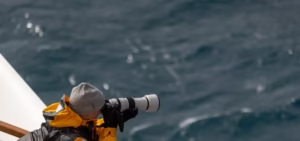
The Guided Photography Program is designed for photographers of all levels. Each day of the voyage, guests who enroll will receive priority boarding on the first wave of Zodiacs. This small group (16 max capacity, 8 per Zodiac) will be led by the same guide each day and will receive professional photography advice, tips, and feedback during outings and in post-excursion workshops. This program is a great opportunity to not only explore but also improve your photography skills.
MORE INFORMATION

Ship Details

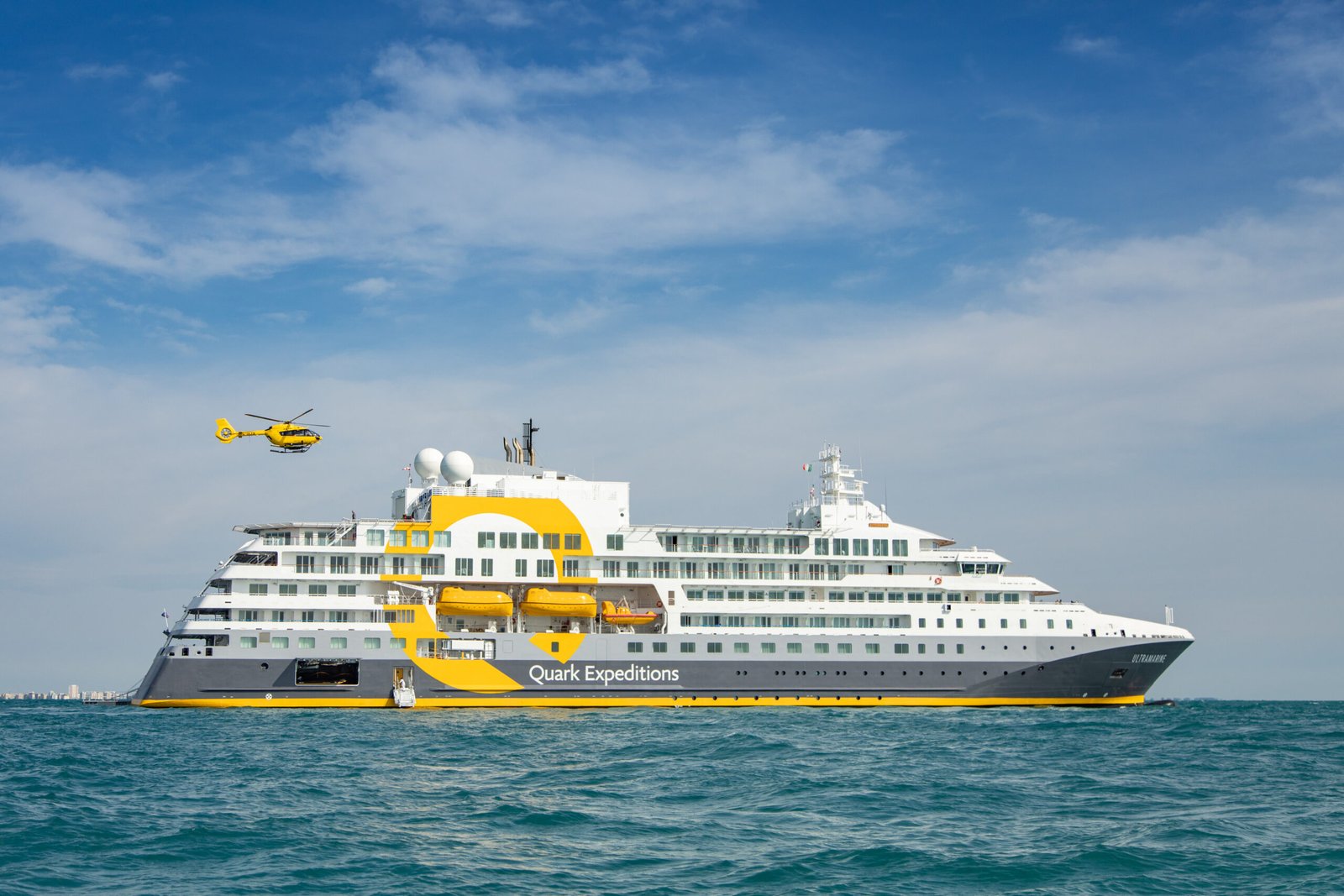
Ultramarine is designed to go beyond the familiar in polar exploration, to discover new places, and to immerse you in the best the region has to offer.

Equipped with two twin-engine helicopters, Ultramarine offers the most robust portfolio of adventure activities in the industry, the most spacious suites in its category, breathtaking public spaces, and more outdoor wildlife viewing spaces than other expedition ships its size. It also features an innovative mix of sustainability features that exceed all industry standards.

With all this and more, Ultramarine is set to deliver the ultimate polar expedition experience.

Type

Small Ship

Capacity

199

Year Built

Polar Boutique
Reception Area
Library
Lounge Areas
Ambassador Theater
Elevator
Gym
Spa, Sauna & Steam Room
Ready Rooms
Observation Decks
Medical Clinic

40-day Operational Range

Ultramarine is designed to go beyond the familiar in polar exploration, to discover new places, and to immerse you in the best the region has to offer and relies on its best-in-class 40-day operational range to do so.

Four Embarkation Points

Embarkation points on the starboard, port, and stern of the ship mean we can load and embark Zodiacs faster, safer and easier than ever before.

MAGS

Micro Auto Gasification System (MAGS) is the industry-leading system that converts waste into energy at the site that it’s generated. MAGs eliminates the environmental impact of waste transportation, offering an innovative sustainability feature that exceed all industry standards.

Twin Engine Helicopters

Two twin-engine helicopters operated from two helidecks allow more passengers to simultaneously experience new destinations accessible only by air, and to enjoy more unique aerial perspectives of the polar regions than on any other ship.

Water-level Zodiac Hangar

An internal Zodiac hangar quickly and safely deploys Ultramarine’s twenty Zodiacs, allowing for more spontaneous off-ship adventures and more intimate wildlife engagement. This unique design allows guests to get off the ship in half the time of other vessels.​

Wraparound Deck

The wraparound deck located on Deck 5 of Ultramarine offers generous outdoor viewing opportunities to take in the polar landscapes and seize the moment when wildlife encounters occur.

MORE INFORMATION

FAQ

Yes!!! After leaving Aberdeen, it will be the ultimate goal of the Captain, Expedition Leader, and the Expedition Team to make sure we get off the ship as much as possible. You’ll participate in landings, zodiac cruises, and any additional activities you’ve signed up for. Check the “Detailed trip itinerary” below for more details on each outing.

The price shown is the “all-in” price after all taxes, fees, port fees, and permits required; which are handled by the tour operator. The only main additional costs will be mandatory travel insurance, optional gratuity, and additional activities.

Not necessarily, no! Our group trips are usually made up of around 50% solo travelers! Prices are always per person, per bed. If you’re a solo traveler, we will match you with a same-gender roommate from our group to share your cabin with. There is also the option for solo cabin availability on certain trips. Please send us a message about solo cabins if that’s your preference.

MORE INFORMATION

Trip Request Form

plugins premium WordPress